
Why Choose a Serviced Office Over a Traditional Lease?
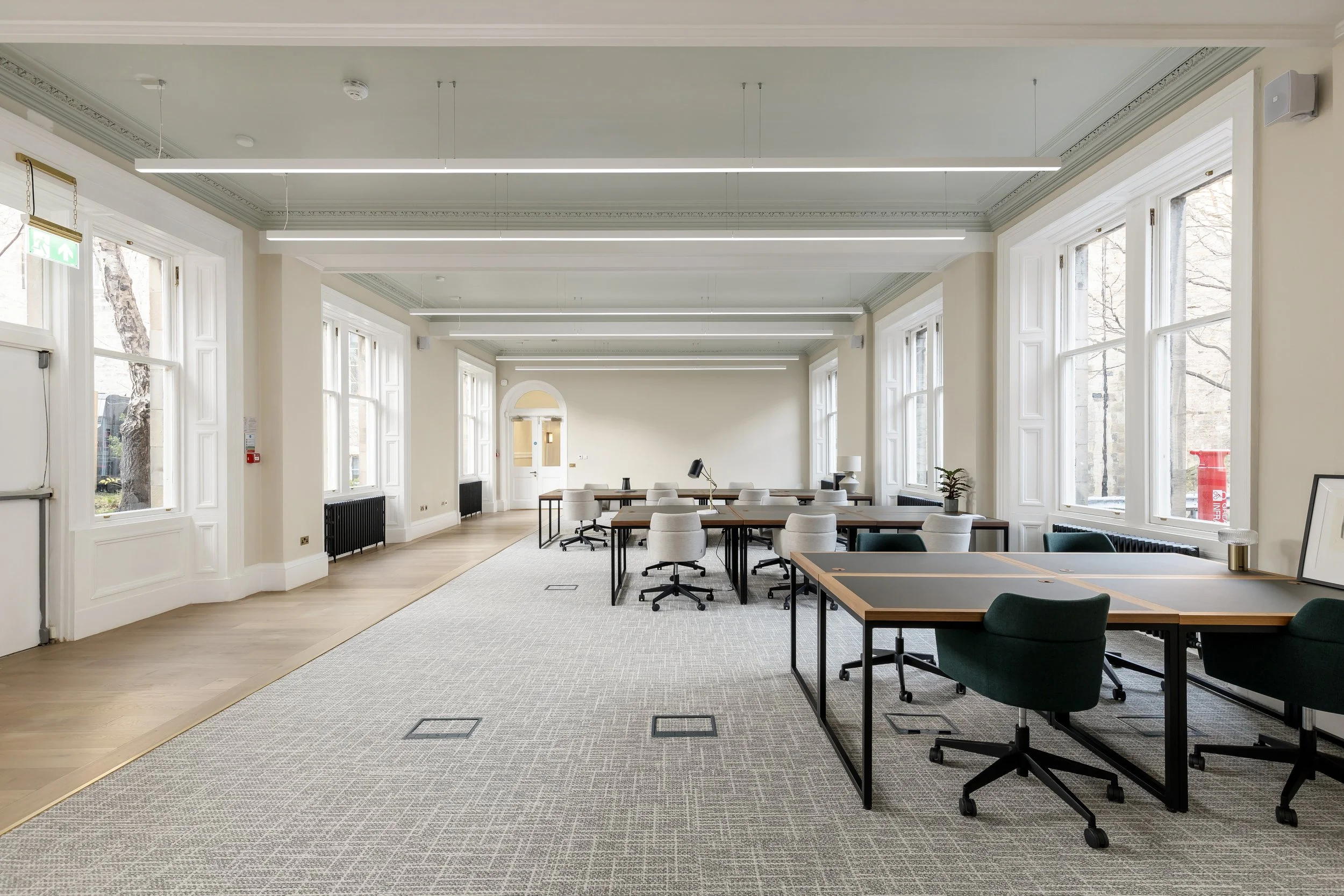
The way businesses work has changed. Office space needs to keep up.
For decades, securing an office followed a familiar formula: find a building, negotiate a lease, fit it out, arrange utilities and connectivity, furnish it, manage the facilities, then commit to it for several years.
That model still has its place. But hybrid working, changing headcounts and greater scrutiny of capital expenditure have changed what the workplace looks like.
Businesses need spaces that support collaboration, client meetings, focused work, and changing team structures. And increasingly, property decisions need to support change rather than restrict it.
This is why serviced offices have shifted firmly into the mainstream. CBRE has reported growing demand for serviced space across the UK. In London, serviced workspaces are expected to grow from around 12% of the office market to 20% by 2030. To understand why this trend is taking off, we recommend learning about the differences between a serviced office and a traditional lease. Here are 5 major differences:
1. More predictable costs
When choosing a traditional lease, the headline rent does not tell the full story.
Fit-out, furniture, connectivity, utilities, maintenance and facilities management can all add significantly to the total cost. These additional expenses can be difficult to predict, with unexpected bills and invoices making it harder to budget and plan ahead. JLL’s 2025 research highlighted continued pressure on fit-out costs across Europe, driven by labour shortages, economic uncertainty and supply-chain volatility.
A serviced office brings many of these costs together into one fixed monthly fee, giving you greater certainty over your total occupancy costs. Rather than managing multiple suppliers and unpredictable invoices, you can enjoy a fully managed workspace with a clear monthly cost. It’s a simpler, more flexible approach that lets you focus on your business without worrying about unexpected expenses.
2. Flexibility has real commercial value
Businesses can change much faster than buildings can. Headcounts fluctuate, teams grow and evolve, and hybrid-working policies continue to change. Yet a long-term lease can leave businesses tied to decisions and assumptions made years earlier.
That’s why flexibility is becoming increasingly important. CBRE’s Q1 2026 analysis found strong demand for flexible office space, with businesses taking a more cautious approach to both how much space they need and how long they want to commit to it.
Edinburgh is seeing a similar trend. A 2025 City of Edinburgh study identified demand for smaller, higher-quality offices in well-connected locations, with more flexible terms. For businesses, this flexibility can reduce the risk of making long-term property decisions based on short-term needs, while making it easier to adapt as the business changes.
3. Move in faster, with less to manage
A conventional office move can quickly turn into a major project for your business.
There are lawyers, contractors, furniture suppliers, technology providers, and facilities arrangements to coordinate before the first employee can even sit down at their desk. For a large organisation with an in-house property team, that may be manageable. For a growing business, however, it can take up valuable time and become a significant distraction.
Serviced offices take much of that work off your hands. Fit out, furniture, connectivity, meeting spaces, communal areas, and building management are already in place, allowing teams to move in and get to work much faster.
There’s also an opportunity cost that doesn’t always appear on a property spreadsheet. If a managing director, COO or operations team spends weeks organising an office fit-out, what else could they be working on? For many businesses, a managed workspace isn’t just more convenient, it gives people more time to focus on the work that actually drives the business forward.
4. The office must be worth the commute
Hybrid working has raised expectations of what a workplace should provide. If focused work can happen at home, the office needs to offer more, from collaboration and client meetings to social connection, community and spaces people genuinely want to use.
That is driving a flight to quality. JLL reports that businesses across EMEA are investing in better environments, collaboration areas, focus rooms and workplace technology to encourage office attendance.
Edinburgh reflects the same trend, with Grade A vacancy at just 2.7% in August 2026.
The office is no longer simply somewhere employees are expected to be. It has become an important part of the employee experience, helping businesses create a workplace that people want to be in. Community engagement, workplace events and local perks can all add to that experience. Research by Office Freedom found that 39.2% would be encouraged into the office by subsidised lunches, while 38.8% cited subsidised travel and 24.6% more social events. Partnerships with nearby cafés, restaurants, gyms and other local businesses can therefore make office days feel more rewarding, while also helping employees engage with the wider neighbourhood around their workplace.
5. Better spaces for different ways of working
There is also evidence that choice matters. Research into perceived location autonomy, meaning an employee’s ability to choose the right environment for their work, has linked greater choice with higher levels of motivation, productivity and wellbeing.
The takeaway is simple: one desk does not need to suit every task. A well-designed serviced workspace can offer private offices, meeting rooms, quiet areas and collaborative spaces, giving people more choice in how they use the workplace.
What this looks like at The Auction Rooms
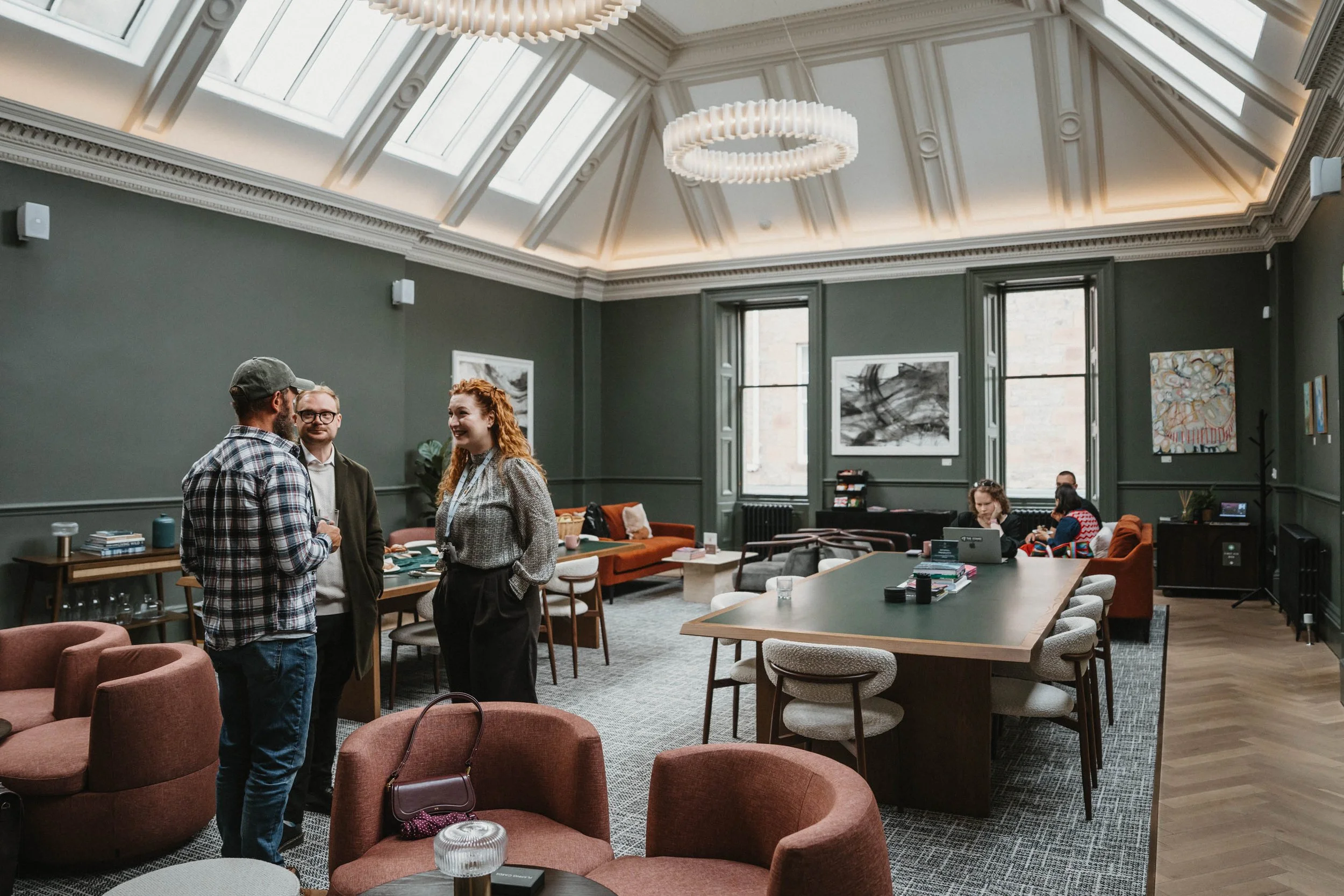
Mota’s flagship workspace, The Auction Rooms on Queen Street in Edinburgh, brings many of these benefits together in one managed environment.
Businesses can take a secure, fully furnished private office without the usual fit-out, connectivity and facilities setup of a traditional lease. Private-office memberships are offered on a monthly desk rate, with high-speed connectivity, secure access and day-to-day workplace operations already in place.
Members can also use credits to book additional spaces when needed, including meeting rooms and a 12-person boardroom, while the members’ lounge provides space for informal meetings and breakout time.
This means businesses do not need to lease every type of space within their own private footprint. A boardroom, for example, can be booked when required rather than paid for every day.
The Auction Rooms also supports different ways of working, with Virtual Office packages, Hot Desks and meeting room bundles giving businesses the flexibility to choose what works best for them. Furthermore, on-site support and operational management are there to reduce the day-to-day burden further. The Mota Concierge Team is dedicated to member experience and available from 7am to 7pm, Monday to Friday. Members have access to seamless support, whether that is booking meeting rooms, troubleshooting tech issues or getting local restaurant recommendations.
The experience also extends beyond the workspace itself. Regular member events create opportunities for people from different businesses to meet, socialise and build connections outside their immediate teams. From wine tastings and pizza-making evenings to yoga sessions and quarterly member gatherings, the programme is designed to give people genuine reasons to come together and enjoy the workplace beyond their day-to-day tasks.
Members also benefit from connections with the surrounding neighbourhood. Partnerships and offers with local businesses can give employees extra reasons to make the most of their office days, whether that is meeting colleagues for lunch, visiting a nearby café or discounts at gyms and spas. In a location like Edinburgh’s New Town, that means the wider area becomes part of the workplace experience too.
Together, these elements create a more rounded employee experience: Somewhere people can focus, meet clients, collaborate with colleagues, build new connections and enjoy being part of a wider community.
For SMEs, professional-services firms and growing teams, that is where the serviced-office model becomes particularly compelling: a private workspace of your own, supported by a broader workplace when you need it, without having to build and manage everything yourself.